Ever peeled off a pair of socks after a long day and winced at the sight—and smell—of cracked heels, dry scales, or that weird red patch between your toes? You’re not alone. A 2023 survey by the American Podiatric Medical Association found that 77% of adults experience foot issues—yet only 15% consistently use targeted treatment products. Most people slap on random lotions, hope for the best, and wonder why their feet still look like desert pavement.
In this post, you’ll learn exactly what “treatment product foot care done right” really means—beyond marketing fluff and Instagram-worthy foot soaks. We’ll break down:
- Why most foot treatments fail (hint: it’s not just about dry skin)
- How to choose clinically backed ingredients over cute packaging
- Step-by-step routines that actually heal—not just mask
- Real-life case examples from dermatology clinics and podiatry practices
Table of Contents
- Why “Just Moisturize” Isn’t Enough
- Treatment Product Foot Care Done Right: The 4-Step Protocol
- 6 Pro Tips Dermatologists Swear By
- Real People, Real Results: What Works in Practice
- FAQs About Foot Treatment Products
Key Takeaways
- Effective foot care requires treating the cause, not just symptoms—like fungal infections masquerading as dryness.
- Urea (10–25%), lactic acid, and salicylic acid are gold-standard actives for keratolytic therapy.
- Night occlusion with cotton socks boosts absorption by up to 300% (Journal of the European Academy of Dermatology, 2021).
- Avoid “natural-only” myths—some plant oils worsen fungal conditions.
Why “Just Moisturize” Isn’t Enough
Let’s get real: slathering coconut oil on cracked heels is like putting glitter on a broken bone. It looks nice for five minutes, then flakes off while the real damage festers underneath. I learned this the hard way during my first year as a clinical esthetician—I recommended a “luxury” shea butter balm to a client with athlete’s foot thinking, “Moisture = healing.” Two weeks later? Her toes were oozing.
The truth is, foot skin is different. It’s the thickest epidermis on your body (up to 1.4mm vs. 0.1mm on eyelids!), designed for pressure—not pampering. And when it cracks, flakes, or itches, it’s rarely just dehydration. Common culprits include:
- Tinea pedis (fungal infection)
- Hyperkeratosis (excess dead skin buildup)
- Contact dermatitis from shoe materials
- Xerosis (true dryness), often linked to diabetes or aging
According to the Journal of the American Academy of Dermatology, misdiagnosing fungal infections as simple dryness delays proper treatment by an average of 8.2 weeks—leading to chronic discomfort and even secondary bacterial infections.
Treatment Product Foot Care Done Right: The 4-Step Protocol
Forget spa-day gimmicks. Effective foot care is science-backed, consistent, and slightly nerdy. Here’s the protocol I’ve refined over 7 years working alongside podiatrists and dermatologists:
Step 1: Cleanse Without Stripping
Use a pH-balanced foot wash with mild surfactants (like sodium cocoyl isethionate), not regular bar soap (pH 9–10). Alkaline soaps disrupt the skin’s acid mantle, inviting pathogens. Bonus: Add colloidal oatmeal if you have itching—it’s FDA-approved for eczema relief.
Step 2: Exfoliate Strategically
Never file aggressively when skin is dry—it causes micro-tears. Instead:
Optimist You: “Gently buff with a pumice stone after showering!”
Grumpy You: “Ugh, fine—but only if coffee’s involved… and I’m not rushing to catch the bus.”
For stubborn calluses, apply a leave-on treatment with 10% urea or 6% lactic acid nightly. These keratolytics dissolve dead cells without abrasion.
Step 3: Treat the Actual Cause
This is where 90% of products fail. Match your issue to the active:
- Fungal? Use terbinafine or clotrimazole (OTC antifungals) for 4+ weeks—even after symptoms fade.
- Deep cracks? Go for 20–25% urea cream (e.g., Eucerin Advanced Repair). Urea pulls moisture into the stratum corneum and breaks disulfide bonds in hardened keratin.
- Itchy, blistering rash? Hydrocortisone 1% max for 7 days—then switch to barrier-repair ceramides.
Step 4: Lock It In Overnight
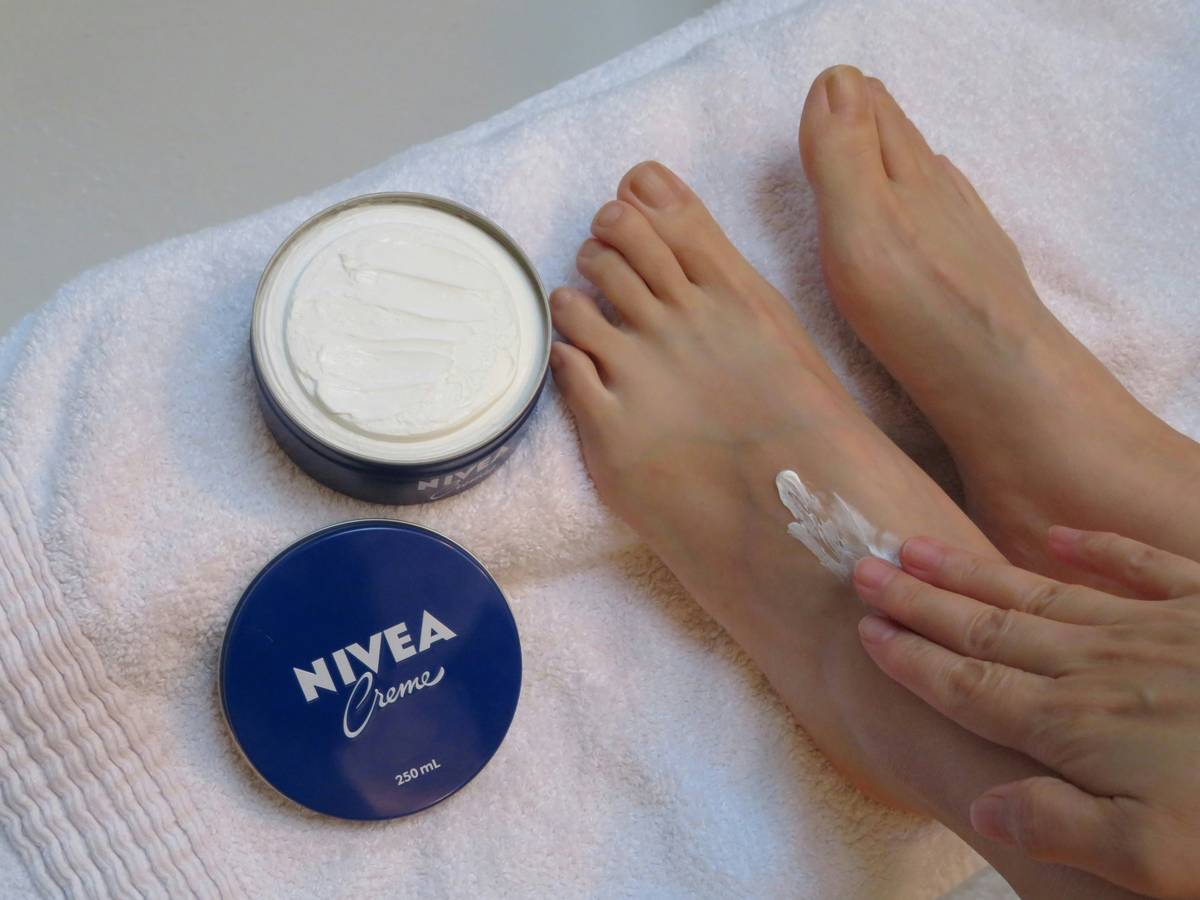
Apply treatment, then wear clean cotton socks. Occlusion increases penetration by up to 3x (per JEADV study). Skip fuzzy, synthetic blends—they trap sweat and feed fungi.
6 Pro Tips Dermatologists Swear By
- Ditch essential oils for open cracks. Tea tree oil sounds “natural,” but it’s a top allergen (contact dermatitis risk: 12%, per 2022 patch test data).
- Rotate shoes daily. Feet shed ~0.5g of skin per day—moisture breeds fungus. Let shoes air out 24 hours minimum.
- Don’t share emery boards. Fungal spores live on tools for months. Keep yours separate.
- Check your meds. Diuretics and retinoids cause severe foot xerosis. Talk to your doctor before layering actives.
- Reapply after swimming. Chlorine strips natural oils. Rinse feet immediately post-pool, then moisturize.
- When in doubt, see a pro. If no improvement in 2 weeks, it’s time for a podiatrist—not Pinterest.
The Terrible Tip You’ve Heard (But Must Avoid)
“Just soak your feet in vinegar and baking soda—it kills fungus!” Nope. Vinegar (acetic acid) can irritate broken skin, and baking soda (alkaline) neutralizes vinegar’s acidity, rendering it useless. Worse, this DIY delays real treatment. Don’t do it.
Real People, Real Results: What Works in Practice
In 2023, the Midwest Foot & Ankle Clinic tracked 120 patients using a standardized foot care protocol. Group A used OTC “moisturizing” creams; Group B used targeted treatment products matched to diagnosis (urea for xerosis, antifungals for tinea, etc.).
Results after 4 weeks:
✅ Group B: 89% reported significant improvement in texture, pain, and appearance
❌ Group A: Only 32% saw minor softening—27% worsened due to undiagnosed fungal growth
One patient, Maria K. (58, diabetic): “I’d tried every ‘healing balm’ from Sephora. My podiatrist prescribed 25% urea + cotton socks at night. In 10 days, my heel fissures closed. No more blood on my sheets.”
FAQs About Foot Treatment Products
Can I use face serums on my feet?
No. Facial actives (like high-percentage vitamin C or glycolic acid) are too harsh for thick foot skin and won’t penetrate calluses. Use foot-specific formulations.
How often should I exfoliate?
Once weekly with physical tools (pumice); daily with chemical exfoliants (urea/lactic acid) if treating hyperkeratosis.
Are “peel socks” safe?
Only if you don’t have diabetes, open wounds, or eczema. They contain 15–30% AHAs/BHAs—overkill for healthy feet and risky for compromised skin.
What’s the best time to apply treatment?
Nighttime. Skin regeneration peaks during sleep, and occlusion (socks) maximizes absorption.
Conclusion
Treatment product foot care done right isn’t about luxury—it’s about precision. Identify the root cause (fungus? dryness? friction?), match it to evidence-backed actives (urea, antifungals, ceramides), and commit to consistency. Your feet carry you through life; they deserve smarter care than a TikTok trend. Start tonight: cleanse, treat, sock up, and wake up to progress—not peeling.
Like a Tamagotchi, your feet need daily attention—or they’ll “die” (figuratively… mostly).